by Donald Scarinci on May 16, 2013

The U.S. Supreme Court must issue decisions on cases considered in the October 2012 Term before the session ends in June. The justices have concluded all oral arguments and are expected to start rolling out the remaining decisions as soon as this week. The Court’s opinion on same-sex marriage is the most anticipated. As we have discussed at length on this blog, the Court may directly address the equal rights issues raised in United States v. Windsor and Hollingsworth v. Perry, or it could sidestep the most serious issues by resolving the case based on procedural issues like standing. The [...]
by Donald Scarinci on May 9, 2013

The U.S. Supreme Court recently considered whether the government could require grant recipients to share its viewpoint as a condition for receiving federal funds. As expected, the justices’ inquiry focused on where to draw the line for First Amendment protection. The Facts of the Case The case revolves around the United States Leadership Against HIV/ AIDS, Tuberculosis, and Malaria Act of 2003, 22 U.S.C. 7631(f). Under the statute, non-governmental organizations (NGOs) receiving federal funding must satisfy a number of conditions. One requires an organization to have a policy explicitly opposing prostitution and sex trafficking in order to receive federal funding [...]
by Donald Scarinci on May 2, 2013

In a closely watched case, the U.S. Supreme Court recently held that privacy interests trump law enforcement when it comes to forced blood draws in a drunk driving investigation. Though the justices could not agree on a bright-line rule, the majority opinion in Missouri v. McNeely suggests that obtaining a warrant should be the default protocol. The Facts of the Case Tyler McNeely was stopped by a Missouri police officer after he was observed speeding and crossing the centerline. After declining to take a breath test to measure his blood alcohol concentration (BAC), he was arrested and taken to a [...]
by Donald Scarinci on April 25, 2013

The right to remain silent, first solidified in Miranda v. Arizona, is one of the bedrock principles of our criminal justice system. However, the extent of its protections may be changing. The U.S. Supreme Court recently heard oral arguments in Salinas v. Texas. The case addressed the significance of a defendant exercising his right to remain silent prior to arrest, specifically whether it can be used as evidence against him in a subsequent criminal trial. The Facts of the Case In 1992, the investigation of a double homicide led Houston police to Genovevo Salinas. He voluntarily agreed to accompany officers [...]
by Donald Scarinci on April 18, 2013

Senator Mitch McConnell is now the second high profile politician in recent months to have secretly recorded remarks come back to haunt him. Mitt Romney’s controversial “47 percent” speech was made at a private fundraiser, while Senator Mitch McConnell’s statements about potential challenger Ashley Judd were made at his campaign headquarters. In both cases, the media disseminated the secretly recorded statements. But was it legal? According to most legal experts, the answer is yes. Under the precedent established in Bartnicki vs. Vopper, the publications are protected by the First Amendment. The Facts of the Case The case involved an illegally [...]
by Donald Scarinci on April 11, 2013

The reignited debate over the availability of contraception suggests the controversial issue could be headed back before the U.S. Supreme Court. Most recently, a New York federal judge ordered the U.S. Food and Drug Administration to make the morning-after pill available to patients of all ages without a prescription. District Court Judge Edward R. Korman characterized the government’s refusal to remove current contraception restrictions as “politically motivated, scientifically unjustified, and contrary to agency precedent.” The ruling could to be appealed all the way to the country’s highest court. The Supreme Court issued its last key contraception decision in 1971. Eisenstadt [...]
by Donald Scarinci on April 4, 2013

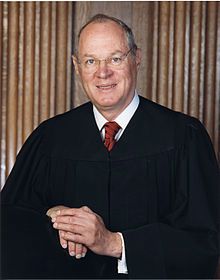
Justice Anthony Kennedy is often the deciding swing vote in key cases before the U.S. Supreme Court. As a result, he receives a lot of attention during oral arguments. Some have even characterized it as “kissing up.” As highlighted in a recent Washington Post column, both sides frequently addressed Justice Kennedy during the two same-sex marriage arguments. The following are just a few examples: “To go back to Justice Kennedy’s point …” “With all due respect, Justice Kennedy …” “With respect, Justice Kennedy …” “As Justice Kennedy said …” In many ways, the attention is warranted. In a Court comprised [...]
by Donald Scarinci on March 28, 2013

Now that the same-sex marriage oral arguments are in the rear view, it is time to focus on the remainder of the 2013 term. While the remaining cases may not be as groundbreaking, there are a number of significant constitutional issues for the Supreme Court to tackle. For instance, the justices recently agreed to take on age discrimination, one of the most common types of employment lawsuits. The specific issue before the Court is whether state and local government employees can avoid the federal Age Discrimination in Employment Act (ADEA) by bringing age discrimination claims directly under the Equal Protection [...]
by Donald Scarinci on March 21, 2013

As the U.S. Supreme Court prepares to consider two high-profile cases on same-sex marriage, speculation is running rampant. While the justices have agreed to take on the controversial issue, it is unclear how far ranging its decision will be. Given the issue of standing raised in the briefs, the Court could resolve the same-sex marriage cases without ever reaching the main issue. Conversely, the court could also issue a sweeping decision on lesbian, gay, bisexual and transgender (LGBT) rights. Assuming the justices do reach the merits of the cases, the primary question before the Court is whether the federal Defense [...]
by Donald Scarinci on March 14, 2013

The U.S. government’s use of high-tech surveillance technology on American citizens has been a hot topic for debate in recent weeks. However, in the wake of a recent Supreme Court decision, at least one top-secret national security program will not face constitutional scrutiny. Clapper v. Amnesty Intl. USA challenged the FISA Amendments Act of 2008, which authorized electronic surveillance targeting non-U.S. persons abroad. However, the Supreme Court ultimately determined that the plaintiffs, including attorneys, journalists, and public interest organizations, lacked standing to bring the suit. The Facts of the Case The Foreign Intelligence Surveillance Act of 1978 (FISA), as amended [...]